
Introduction
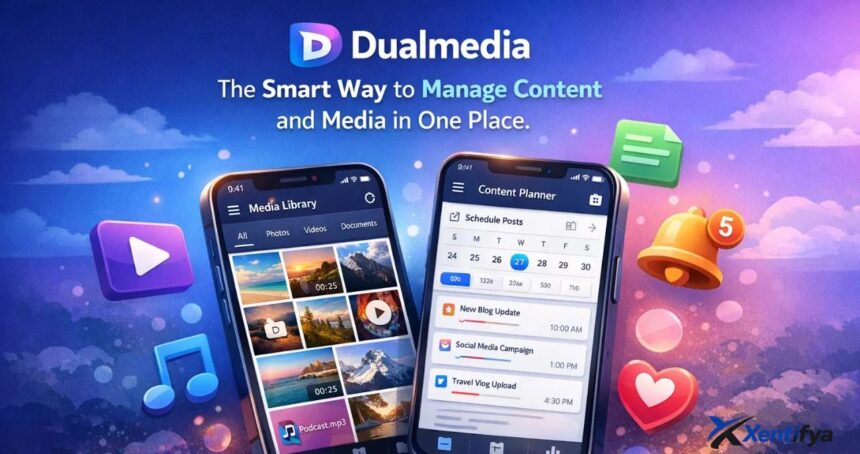
The phrase application mobile dualmedia is still relatively new, and that is exactly why it causes confusion for many readers, founders, and even app teams. In practical terms, the phrase is commonly used to describe a mobile application that combines at least two media formats inside one seamless experience, such as video and text, audio and live interaction, or images and commerce tools. Recent articles using the term describe it as a unified mobile environment where users can move between media formats without friction.
- Introduction
- BIO
- What application mobile dualmedia really means
- Why this model matters now
- What success looks like
- The features that matter most
- How to build an application mobile dualmedia the right way
- Start with the use case, not the technology
- Study behavior before building screens
- Design one core loop
- Build modularly
- Test in real contexts
- Monetization without hurting the experience
- Mistakes that quietly damage growth
- Where the future is going
- Conclusion
- FAQs
That idea matters because user expectations around mobile products have changed. People no longer want apps that do only one thing in isolation. They expect content, interaction, discovery, and action to sit in the same place. Global mobile behavior supports that shift: DataReportal reports that there were 5.78 billion mobile users in 2025, while Sensor Tower says consumers spent 4.2 trillion hours in apps in 2024 and global in-app revenue reached $150 billion.
So when we talk about application mobile dualmedia success, we are really talking about building an app that blends formats intelligently, respects user attention, and turns convenience into long-term loyalty. A winning dualmedia app is not simply “more features.” It is a better-designed experience.
This guide explains what application mobile dualmedia means, why it matters, what makes it successful, how to build it well, and where many projects go wrong.
BIO
| Topic | Details |
|---|---|
| Keyword | application mobile dualmedia |
| Definition | Mobile app combining multiple media formats |
| Purpose | Enhance user experience and engagement |
| Key Benefit | Seamless content and interaction in one place |
| Target Users | Mobile-first users in the US market |
| Popular Formats | Video, audio, text, interactive features |
| Core Feature | Smooth switching between media types |
| Main Goal | Increase retention and usability |
| Monetization | Ads, subscriptions, in-app purchases |
| Industries | E-commerce, education, entertainment |
| Success Factor | Simple design with high performance |
| Future Trend | AI-driven and personalized experiences |
What application mobile dualmedia really means
At its core, application mobile dualmedia refers to a mobile app experience built around two or more synchronized types of media. That may include video with chat, audio with text transcripts, product browsing with short-form content, or education with live interaction and downloadable resources. The common thread is integration. The app is designed so users do not feel like they are jumping between disconnected tools.
This is different from a traditional app that may technically include video, images, and text but treats them as separate features. In a dualmedia experience, each format supports the other. A recipe app might combine short video instruction with interactive shopping lists. A learning app might pair audio lessons with on-screen notes and quizzes. A retail app may merge live video, product reviews, and instant checkout inside one flow.
That difference sounds small on paper, but it changes the user experience completely. Instead of making people adapt to your structure, the app adapts to how people naturally consume information. Some users want to watch, some want to skim, some want to listen, and many want all three at different moments of the day.
Why this model matters now
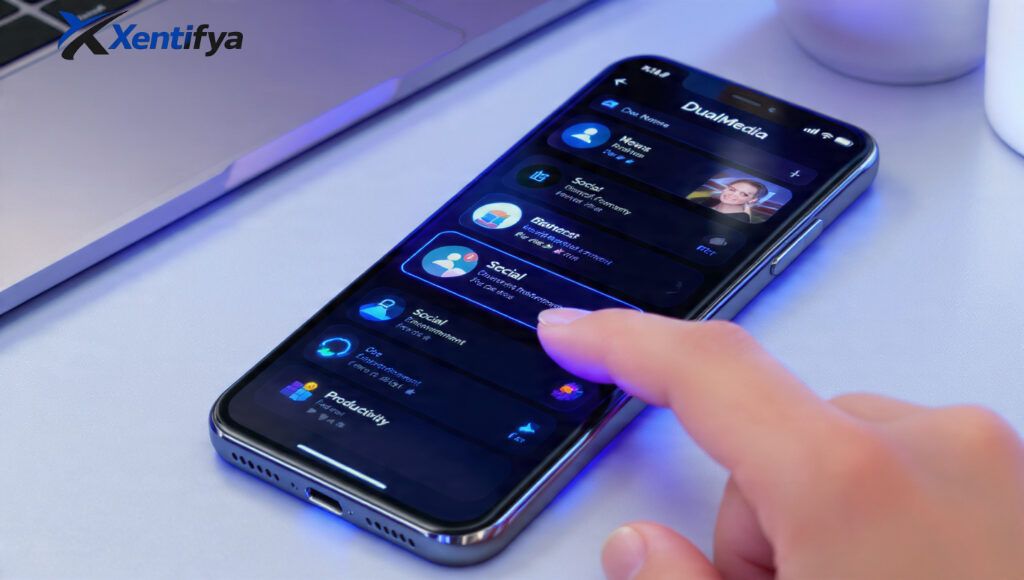
The mobile market is mature, but user expectations are still rising. People are more selective about which apps deserve space on their phones. That means a new app needs to feel useful immediately and stay useful over time.
The broader market trends strongly support richer, more integrated mobile experiences. DataReportal’s 2025 reporting shows the internet and mobile ecosystem continuing to expand in both reach and activity, with mobile devices playing a central role in daily digital behavior.
At the same time, Sensor Tower reports that mobile consumer spending and time spent in apps have continued to climb. That matters because it shows users are still willing to invest attention and money in mobile platforms that deliver ongoing value.
This is where application mobile dualmedia becomes valuable. It gives developers and brands a way to serve users more completely without forcing them to leave the app for the next step. A person can discover, learn, compare, communicate, and convert in one place. That reduces friction. And in mobile design, reducing friction often means increasing retention.
It also creates resilience. If one content format underperforms for a user, another can keep them engaged. Someone who skips long text may still watch a short clip. Someone who cannot listen to audio during work hours may return later for captions or highlights. Dualmedia design respects real human habits instead of assuming a single way to consume content.
What success looks like
A successful application mobile dualmedia does not win because it is flashy. It wins because it feels natural.
The first sign of success is clarity. Users understand the value of the app within moments. They know what the app helps them do, and they can begin without confusion. If the app offers live video, written summaries, and community discussion, the user should instantly understand why those pieces belong together.
The second sign is flow. The media formats should work like parts of one conversation. A user watching a product demo should be able to read specs without losing context. A learner listening to a lesson should be able to open notes without interrupting progress. A shopper browsing a live session should be able to act right there, not later.
The third sign is performance. The more media layers an app carries, the more important technical discipline becomes. Slow transitions, poor loading, and unstable playback can destroy trust quickly. A dualmedia app only feels premium if it performs reliably.
The fourth sign is retention. Strong apps are not merely downloaded; they are revisited. Adjust’s 2025 app trends materials emphasize the importance of data-driven growth, lifecycle measurement, and retention-focused optimization in a more competitive app market. A dualmedia app that creates repeat value has a much better chance of surviving than one built only for novelty.
The features that matter most
A simple interface
When an app combines formats, design must become simpler, not busier. Good dualmedia design hides complexity. It should feel obvious where to tap, what to watch, what to read, and what to do next.
This is where many teams fail. They confuse richness with clutter. The goal is not to prove how much the app can do. The goal is to help the user do what they came for with less effort.
Smart media pairing
Not every combination works. The strongest pairings feel complementary. Video and summaries work well. Audio and transcripts work well. Live sessions and product cards work well. Random media stacking does not.
The rule is simple: one medium should deepen the value of the other. If it distracts from it, it probably should not be there.
Fast performance
Heavy content demands strong engineering. Streaming, caching, syncing, adaptive image loading, and responsive UI all matter. If the app hesitates every time media changes, the entire dualmedia promise breaks down.
Personalization
A strong application mobile dualmedia experience learns from user behavior. It notices whether someone prefers audio, short clips, longer reading, or interactive tools. Then it adjusts. That does not mean becoming invasive. It means becoming useful.
Cross-platform consistency
Users expect the same core experience on iPhone, Android, and often the web. The design may adapt, but the value should remain consistent. An app that feels polished on one platform and fragmented on another will struggle to build trust.
How to build an application mobile dualmedia the right way
Start with the use case, not the technology
Too many projects begin with excitement around features. Founders say they want video, live chat, AI summaries, shopping, and community tools. But that is not a strategy. That is a wishlist.
Begin with one question: What job is the user hiring this app to do?
If the answer is learning, then every media layer should support understanding and memory. If the answer is shopping, every layer should reduce hesitation and increase confidence. If the answer is entertainment, the app should optimize delight and return behavior.
Once the user’s job is clear, the media mix becomes easier to define.
Study behavior before building screens
Research should focus on real habits, not assumptions. Where do users drop off? When do they want to watch versus skim? What interrupts them? What makes them come back?
Market data makes it clear that mobile is not a side channel anymore. It is where people spend a meaningful portion of their digital lives. That means even small points of friction matter. A confused first session can cost you the user permanently.
Design one core loop
Every strong app has a repeatable loop. In a dualmedia app, that loop might be discover, consume, interact, act. Or it may be open, watch, save, return. The exact sequence depends on the category, but the principle stays the same.
Users should not need to think hard to repeat the value cycle. The app should make the next useful action feel natural.
Build modularly
Application mobile dualmedia projects can grow messy if every feature is deeply entangled. A better approach is modular architecture. Keep content delivery, media playback, user profiles, analytics, and communication systems cleanly structured. That makes updates easier and improves reliability.
Test in real contexts
An app may look perfect in internal demos and still fail in everyday life. Test it in noisy environments, on weak connections, with interrupted attention, and with users who are not deeply familiar with your product. That is where the truth lives.
Monetization without hurting the experience
One of the biggest advantages of a dualmedia model is flexibility in monetization. Because the app supports different ways to engage, it can support different ways to earn.
Subscriptions work well when the app offers ongoing value, exclusive access, or premium tools. In-app purchases fit when users want optional upgrades, digital goods, or special content. Commerce integration works when media directly supports buying decisions. Advertising can work too, but only when it does not interrupt the experience so aggressively that it weakens trust.
Sensor Tower’s mobile market reporting shows consumers continue to spend heavily inside apps, especially when the value is clear and repeatable. That is an important lesson. People will pay, but only when the app earns that payment.
The strongest monetization strategy is rarely the most aggressive one. It is the one that fits the rhythm of the product.
Mistakes that quietly damage growth
A common mistake is overbuilding. Teams pack every media format into the app because they think “more” will look more innovative. In reality, too much choice often creates confusion.
Another mistake is weak onboarding. If users do not understand the benefit of the dualmedia setup in the first session, they may never return. Onboarding should show value, not just features.
A third mistake is poor measurement. Teams track downloads but ignore watch time, completion rate, feature usage, repeat sessions, and conversion flow. Adjust’s 2025 material stresses that smarter growth depends on meaningful measurement rather than surface-level metrics.
There is also the mistake of forcing trends. Not every app needs live video. Not every app needs AI. Not every product needs community features. Use only what makes the user journey stronger.
Finally, many apps forget the emotional side of design. Users remember how an app made them feel. Smooth, calm, respectful design creates confidence. Chaotic design creates fatigue.
Where the future is going
The future of application mobile dualmedia looks less like separate content formats sitting side by side and more like intelligent blending. AI will likely make those blends more responsive through captioning, summaries, personalized recommendations, and adaptive presentation. Sensor Tower’s 2025 reporting on AI apps shows how quickly users are embracing new mobile experiences when they deliver obvious utility.
At the same time, the broader mobile market continues to reward products that keep attention and convert it into value. Sensor Tower’s 2026 mobile overview points to continued growth in downloads, spending, and time spent, suggesting that users are still open to deeper mobile experiences when the product earns their trust.
That does not mean every app should become an everything-app. It means the winners will be the ones that combine formats with discipline. Better integration will matter more than feature volume.
Conclusion
Application mobile dualmedia is not just a trendy phrase. It reflects a real shift in how mobile experiences are being designed and consumed. Users want apps that feel complete, flexible, and easy to navigate. They want to watch, read, listen, interact, and decide without being pushed through a maze of disconnected screens.
The success of this model depends on thoughtful structure. The best dualmedia apps are clear in purpose, smooth in execution, selective in features, and strong in performance. They do not overwhelm users. They support them.
If you are building in this space, the opportunity is real. Mobile usage remains massive, app engagement remains valuable, and users still reward products that save time and reduce friction.
In the end, a successful application mobile dualmedia is not about combining media for the sake of novelty. It is about combining them with enough care that the experience feels simpler, smarter, and more human.
Sources consulted: DataReportal Digital 2025, Sensor Tower State of Mobile 2025 and 2026, Adjust Mobile App Trends 2025, and recent definitional articles discussing the emerging use of the phrase “application mobile dualmedia.”
FAQs
What is an application mobile dualmedia?
An application mobile dualmedia is a mobile app that combines two or more types of media, such as video, audio, text, or interactive features, into one seamless user experience. It allows users to engage with content in different ways without leaving the app.
Why are application mobile dualmedia apps becoming popular?
These apps are growing because users prefer convenience and flexibility. Instead of switching between multiple apps, they can access content, interaction, and actions in one place, saving time and improving engagement.
How much does it cost to build an application mobile dualmedia?
The cost varies depending on features, design, and complexity. A basic version may cost a few thousand dollars, while advanced apps with high performance and integrations can require a much larger investment.
Which industries benefit most from application mobile dualmedia?
Industries like e-commerce, education, entertainment, and social media benefit the most. These sectors rely heavily on combining content formats to improve user experience and increase engagement.
What makes an application mobile dualmedia successful?
Success depends on simple design, smooth performance, smart media integration, and a clear purpose. Apps that focus on user needs and provide real value tend to perform better in the long run.