

Introduction
The name William John March occasionally appears in online searches, historical references, genealogy records, and public databases. However, one challenge quickly becomes apparent: there is very little verified information available about an individual widely recognized under the exact name William John March.
- Introduction
- Who Was William John March?
- Understanding the Identity Confusion
- Why People Search for William John March
- The Challenges of Historical Research
- The Importance of Verified Sources
- What We Can Say With Confidence
- The Role of Genealogy in Preserving History
- Why Accuracy Matters
- Lessons From Limited Historical Records
- Interesting Facts About the Search for William John March
- The Name Continues to Generate Interest
- Records May Exist in Multiple Locations
- Identity Verification Is Essential
- New Discoveries Remain Possible
- Genealogy Is Driving Interest
- Frequently Asked Questions
- Who was William John March?
- Why is William John March difficult to research?
- Was William John March a famous historical figure?
- Are there records related to William John March?
- Can new information about William John March be discovered?
- Conclusion
- William John March: Quick Facts
This creates an interesting situation for researchers, students, family historians, and curious readers. When searching for William John March, many people encounter fragmented references, incomplete records, or information that appears to be connected to other individuals with similar names.
This guide examines what is known about the keyword William John March, why the search term creates confusion, and how researchers can approach the topic responsibly. Rather than presenting unverified claims as facts, this article focuses on transparency, historical research practices, and the importance of reliable documentation.
Understanding the available information is essential because accuracy matters. In the digital age, names can become mixed together, and unsupported details can spread quickly. A careful approach helps separate fact from assumption.
Who Was William John March?
The most straightforward answer is that there is currently no widely documented public figure with extensive, verified biographical information available under the exact name William John March.
Unlike famous political leaders, authors, scientists, military figures, or entertainers whose lives are well documented through books, archives, and historical records, William John March does not appear to have a substantial body of publicly accessible information attached to that exact name.
As a result, many searches for William John March lead researchers toward records that may belong to different individuals. Some results may reference local historical documents, family history databases, census records, military archives, or other sources where the name appears without enough context to establish a complete biography.
This lack of verified information does not mean the person never existed. Instead, it highlights a common challenge in historical and genealogical research: many individuals leave limited public records, especially if they were not public figures during their lifetime.
Understanding the Identity Confusion
One reason the keyword William John March attracts attention is because it can easily be confused with similar names.
Historical records often contain variations in spelling, middle names, initials, abbreviations, and documentation methods. Researchers may encounter references to individuals named William March, William J. March, William John M. March, or other similar combinations.
In many cases, records created decades or centuries ago were handwritten. Transcription errors, missing documents, and inconsistent recordkeeping can make it difficult to determine whether multiple references point to the same person.
Identity confusion is not unique to William John March. Historians regularly face similar challenges when researching individuals who share common names. The problem becomes even more complicated when surviving records are incomplete or scattered across different archives.
For this reason, responsible research requires caution before connecting unrelated records to a single individual.
Why People Search for William John March
Interest in William John March may stem from several different reasons.
Some individuals encounter the name while researching their family history. Others may discover it in an old document, legal record, cemetery listing, military archive, newspaper mention, or local historical publication.
Genealogy has become increasingly popular in recent years, leading many people to investigate family names and ancestral connections. During this process, researchers often come across names that appear in official records but lack detailed biographical information.
The search for William John March may also be motivated by academic research, historical curiosity, or efforts to verify information found online.
Whatever the reason, the search demonstrates a broader interest in preserving personal histories and understanding the lives of individuals whose stories may not have been widely recorded.
The Challenges of Historical Research
Researching a person with limited documentation can be surprisingly difficult.
Modern public figures generate thousands of digital records through interviews, articles, social media posts, and official publications. Earlier generations often left behind far less information.
When investigating someone like William John March, researchers may encounter several obstacles:
• Missing records
• Incomplete documentation
• Conflicting information
• Name variations
• Lost archives
• Limited local records
• Unverified online claims
Historical records can also be affected by natural disasters, wars, administrative changes, and deterioration over time. Entire collections of documents have been lost throughout history, leaving gaps that may never be fully reconstructed.
Because of these limitations, responsible researchers avoid presenting assumptions as established facts.
The Importance of Verified Sources
One of the most important lessons from researching William John March is the value of verified sources.
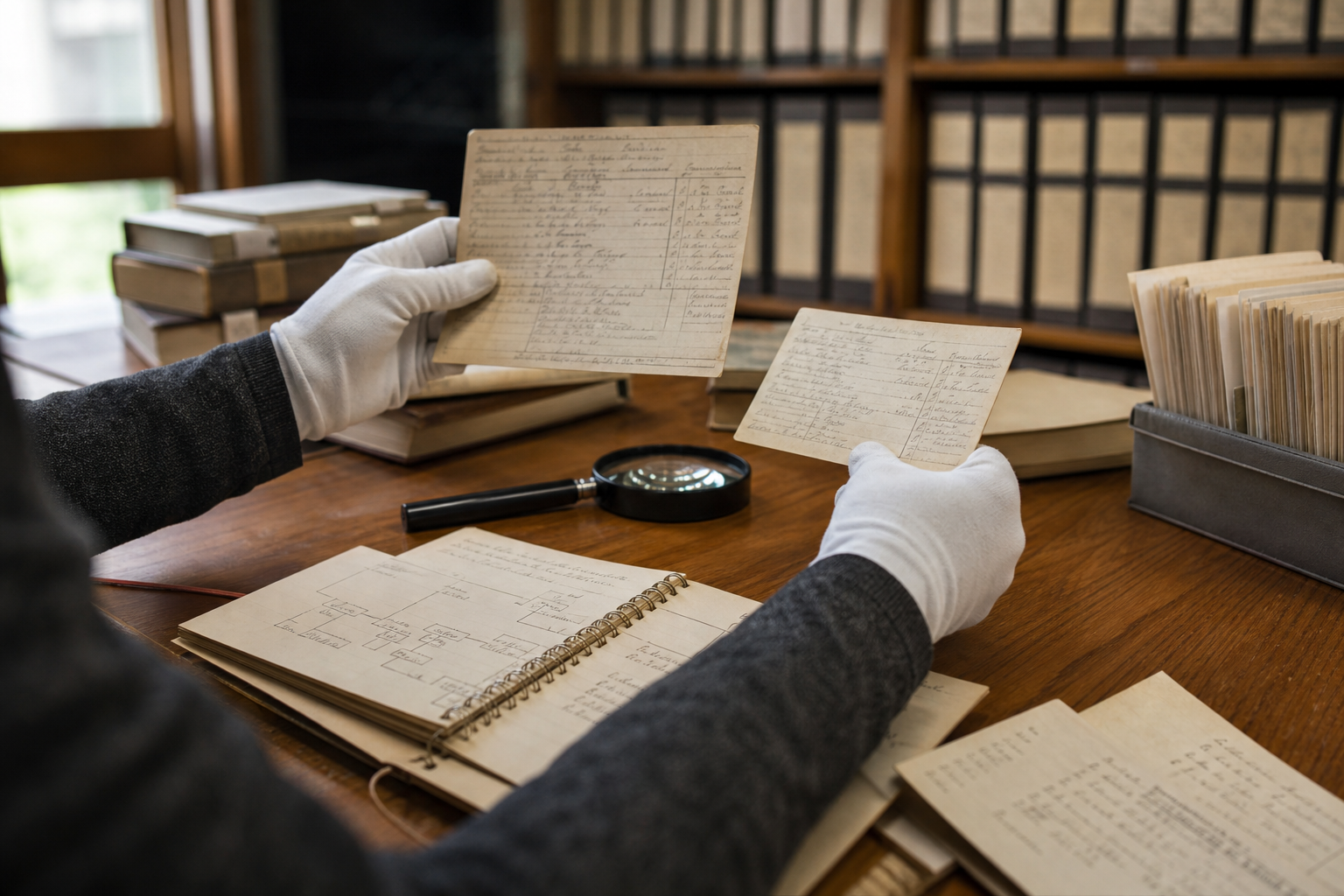
Reliable information typically comes from records that can be independently confirmed. These may include:
Official Documents
Birth certificates, death certificates, marriage records, census records, and government registrations often provide foundational evidence about an individual’s life.
Historical Archives
Libraries, museums, and archive collections preserve documents that help establish historical accuracy.
Newspaper Records
Newspapers can provide valuable context, although reported information should still be verified whenever possible.
Family Records
Letters, photographs, journals, and family documents may contain information unavailable elsewhere.
Academic Research
Scholarly publications often apply rigorous standards when evaluating historical evidence.
When researching William John March, relying on credible sources becomes especially important because publicly available information appears limited.
What We Can Say With Confidence
While extensive biographical details remain difficult to verify, a few conclusions can be drawn responsibly.
First, the name William John March exists in various records and search references, which explains continued public interest.
Second, there is currently insufficient widely available evidence to support a comprehensive public biography under that exact name.
Third, researchers should approach any detailed claims with caution unless they are supported by trustworthy documentation.
Finally, the search itself demonstrates the ongoing importance of historical preservation and accurate recordkeeping.
These conclusions may seem modest, but they are grounded in evidence rather than speculation.
The Role of Genealogy in Preserving History
The story of William John March also highlights the growing importance of genealogy.
Family historians play a major role in preserving information that might otherwise disappear. Through careful research, they help document family relationships, migration patterns, occupations, and community histories.
Many individuals who never became famous still contributed meaningfully to their families, workplaces, neighborhoods, and societies. For another biographical profile, read what makes William Heath Hoover worth knowing today. Genealogy helps ensure those contributions are not forgotten.
In some cases, future discoveries may reveal additional information about individuals whose histories are currently incomplete. New archives become available, documents are digitized, and historical records continue to be uncovered.
As a result, research into names such as William John March remains an ongoing process rather than a finished story.
Why Accuracy Matters
The internet makes information more accessible than ever before, but it also creates opportunities for misinformation.
When researchers cannot find complete information about a person, there can be a temptation to fill gaps with assumptions. Unfortunately, these assumptions may later be repeated as facts.
Accuracy matters because incorrect information can affect:
• Family histories
• Academic research
• Historical records
• Public understanding
• Future investigations
For a topic like William John March, maintaining clear distinctions between verified facts and speculation is essential.
A responsible approach acknowledges uncertainty rather than disguising it.
Lessons From Limited Historical Records
The search for William John March offers several broader lessons.
One lesson is that not every historical figure leaves behind extensive documentation. Many people lived meaningful lives without generating large public records.
Another lesson is that historical research often involves patience. Answers may emerge gradually through careful examination of documents and archives.
The topic also reminds us that preserving records today benefits future generations. Photographs, letters, journals, and official documents can become valuable historical resources decades from now.
Perhaps most importantly, the search demonstrates that history is not only about famous individuals. Ordinary people also shape communities, families, and societies in lasting ways.
Interesting Facts About the Search for William John March
Although detailed biographical information remains limited, several interesting observations can be made about the topic.
The Name Continues to Generate Interest
Search engine activity suggests that people regularly seek information about William John March, indicating ongoing curiosity.
Records May Exist in Multiple Locations
Information connected to the name could potentially be distributed across local archives, family collections, government records, and historical databases.
Identity Verification Is Essential
Researchers must carefully distinguish between individuals who share similar names.
New Discoveries Remain Possible
Historical research is constantly evolving. Previously unavailable records may become accessible in the future.
Genealogy Is Driving Interest
Many searches likely originate from individuals tracing family connections and ancestral histories.
Frequently Asked Questions
Who was William John March?
Based on currently available public information, there is no widely documented biography associated with the exact name William John March. The name appears in searches and records, but comprehensive verified details remain limited.
Why is William John March difficult to research?
The primary challenge is the lack of extensive publicly accessible documentation tied specifically to that exact name. Researchers may also encounter identity confusion involving similar names.
Was William John March a famous historical figure?
At present, there is no strong evidence indicating that William John March was a widely recognized public figure with a well-documented historical profile.
Are there records related to William John March?
Various records and references may exist, but researchers should verify their authenticity and relevance before drawing conclusions.
Can new information about William John March be discovered?
Yes. Historical research is ongoing, and newly digitized archives or previously unavailable documents may provide additional insights in the future.
Conclusion
The question “Who was William John March?” does not currently have a simple or definitive answer supported by extensive public documentation. While the name appears in searches and records, verified information remains limited, making careful research essential.
Rather than inventing details or relying on assumptions, the most responsible approach is to acknowledge what is known, recognize what remains uncertain, and continue searching for reliable evidence. This commitment to accuracy helps preserve the integrity of historical research and protects the stories of real people from becoming distorted over time.
The search for William John March serves as a reminder that history is often incomplete. Some lives are documented in great detail, while others leave behind only fragments. Yet those fragments still matter. They encourage investigation, preserve curiosity, and remind us that every person has a story worth understanding—even when parts of that story remain undiscovered.
William John March: Quick Facts
| Label | Information |
|---|---|
| Name | William John March |
| Known For | Subject of historical and genealogy searches |
| Public Profile | Limited verified information available |
| Historical Status | Not widely documented |
| Main Challenge | Name confusion |
| Best Sources | Archives and official records |